Back


0 results
Suggested Searches
0 results
Suggested Searches

Spring is here in New Zealand — and while I love the lighter mornings, waking to birds chirping, warmer days and flowers starting to bloom, for many it also means the return of sneezing, irritated sinuses, sore throats and that familiar heavy-head feeling.
As a naturopath, medical herbalist and nutritionist, there are a few herbal staples I like to keep on hand as we move into spring, particularly herbs that support the sinuses, upper respiratory system and immune health. One that has had a place in our family’s herbal cupboard for years is Harker Herbals Sinus Clear. It’s formulated to support dry, clear sinuses, soothe sore throats and heavy heads, and provide seasonal allergen relief.
But when I’m choosing a herbal product, I’m not simply looking at how many different herbs are listed on the bottle. I’m much more interested in what’s actually in the formula and the amounts being provided.
For me, more ingredients doesn’t automatically mean a better product. As a practitioner, I’m looking at what the active ingredients actually are, why they’ve been included, whether they complement one another and, most importantly, whether the key herbs are present in meaningful amounts.
It’s easy to pick up two herbal products, compare the labels and assume the one with the longer ingredient list must be better. But when it comes to herbal medicine, I’d much rather see a considered formula containing a smaller number of purposeful ingredients at meaningful levels than a long list of herbs included in tiny amounts simply so they can appear on the label.
That’s something I appreciate about Harker Herbals, and Sinus Clear is a great example. It brings together six herbs — echinacea, pelargonium, elderflower, ribwort, horseradish and ginger — each selected to provide complementary support for sinus comfort and the mucous membranes.
Of all the ingredients in Sinus Clear, echinacea is the hero herb that immediately stands out to me as a medical herbalist. Echinacea purpurea has a long history of traditional use and is one of the herbs I regularly think of when looking to support healthy immune function, particularly alongside upper respiratory and sinus health. The root contains naturally occurring active plant compounds, including alkylamides, which have been studied for their role in supporting healthy immune responses.
Each 5 mL dose of Harker Herbals Sinus Clear contains echinacea extract equivalent to 1,008 mg of dried Echinacea purpurea root — just over one gram. To me, that’s an important distinction. It’s not simply about being able to put echinacea on the front of the packaging; there’s a meaningful amount of the hero herb included in the formula.
This is something I always encourage people to consider when looking at herbal products. Look beyond the pretty packaging and long ingredient lists and take a closer look at what is actually being provided in each dose.

While echinacea is a standout ingredient for me, one of the things I love about herbal medicine is the way different herbs can work alongside one another. Sinus Clear combines echinacea with ribwort, elderflower, pelargonium, horseradish and ginger, botanicals selected for their complementary support for sinus comfort and the mucous membranes.
Ribwort is traditionally used to support the mucous membranes of the upper respiratory tract, while elderflower has a long history of traditional use for sinus and respiratory support. Horseradish is traditionally used to support clear airways, while pelargonium provides further upper respiratory and immune support.
Together, the formula provides support when you’re experiencing things like nasal drip, a blocked nose, sinus and ear pressure or that sore, heavy-head feeling that can accompany seasonal changes. It’s also one I particularly think of during allergen season, when many of us notice our sinuses becoming much more reactive.
That’s one of the things I enjoy about working with herbal medicine. I’m not assessing every herb in isolation; I’m looking at the formula as a whole, why those particular herbs have been combined and how their actions complement one another.
I’ve personally used Harker Herbals since around 2018, long before working with them, and their products have become a familiar staple in our household — even more so since having children. Alongside thoughtful ingredient combinations, quality is another major factor I consider when choosing herbal products.
Harker Herbals’ ingredients are third-party tested for heavy metals and pesticides and verified for authenticity and purity. Their products are also made here in New Zealand in a GMP-certified facility. As both a practitioner and a mum, those are things I value when deciding what I’m comfortable keeping in our home and offering to our family.

I’m also a big fan of liquid herbal formulas. They’re convenient and easy to take, particularly if you’re someone who doesn’t enjoy swallowing tablets or already has enough capsules in their daily routine. Liquid preparations also don’t require a tablet or capsule to break down first, although absorption and bioavailability ultimately depend on the individual herb and how it has been formulated.
Sometimes, practically speaking, taking a spoonful of a herbal liquid is simply an easier addition to the day.
Herbal medicine is only one part of the picture. If you know your sinuses tend to struggle when the seasons change, there are some other simple things you can do alongside your usual herbal support.
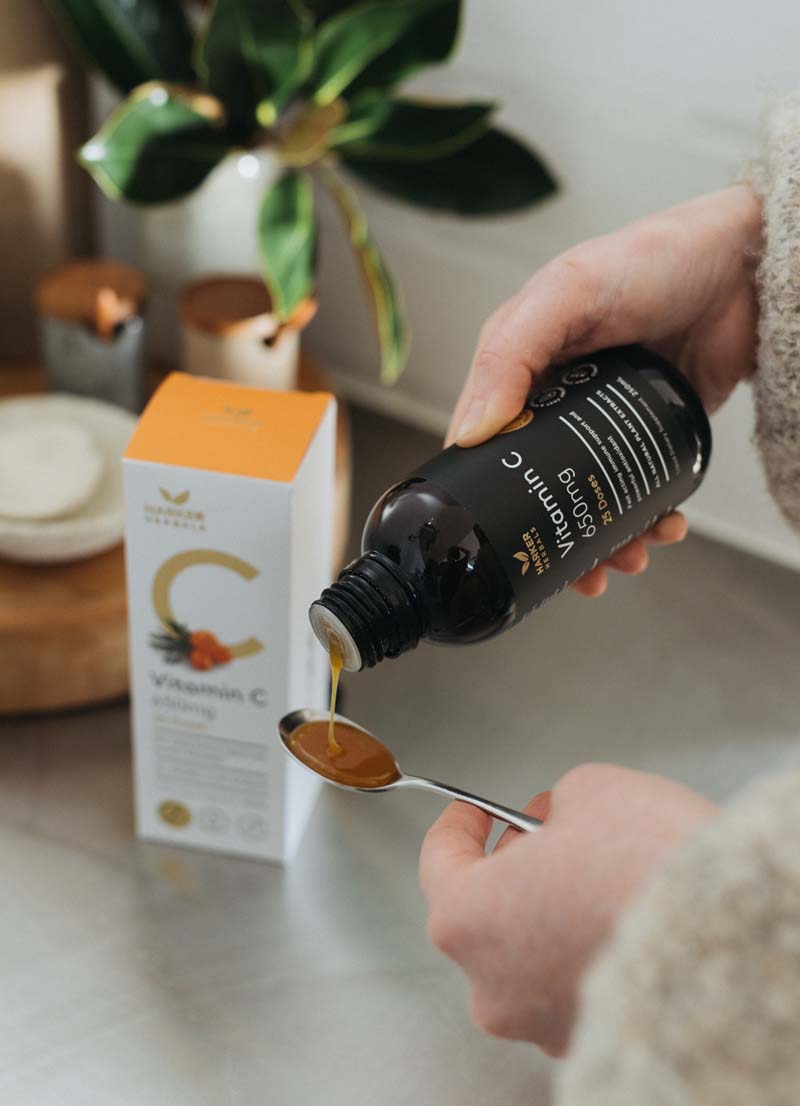
I always encourage prioritising vitamin C-rich whole foods such as kiwifruit, citrus, berries, capsicum and broccoli. Additionally, we are big fans of the Harker Herbals Vitamin C range. Vitamin C contributes to normal immune function, so getting plenty this time of year is a great place to start. Staying well hydrated is important too, particularly for supporting healthy mucous membranes and normal mucus consistency. Water is obviously important, but warm herbal teas can be another easy way to increase your fluid intake throughout the day.

For those who are particularly prone to seasonal allergens, a saline nasal rinse can be a useful non-medicated option to help physically clear pollen, mucus and other irritants from the nasal passages. Always use saline products as directed and use appropriately treated or sterile water when required.
It can also help to think about how much pollen you’re bringing into your home. On particularly high-pollen days, showering and washing your hair after being outdoors, changing your clothes and keeping bedroom windows closed can all help reduce your exposure overnight.
And finally, don’t forget the basics. Adequate sleep, nourishing food, and allowing your body enough time to recover may not be the most exciting recommendations, but they remain foundational to supporting normal immune function.
Spring is such a beautiful season, and having a few simple tools on hand can make navigating seasonal sinus changes that little bit easier. For me, it comes back to choosing support intentionally — understanding what’s in the products I use, why the ingredients are there and knowing that the formulation and quality behind them are something I can trust.
Always read the label and use only as directed. If taking prescribed medication, consult your health professional before taking this product. If symptoms persist, seek professional medical advice.

By Emily Leilua I Founder of Nourisher Women’s Health
Degree-Qualified Naturopath and Clinical Nutritionist


